
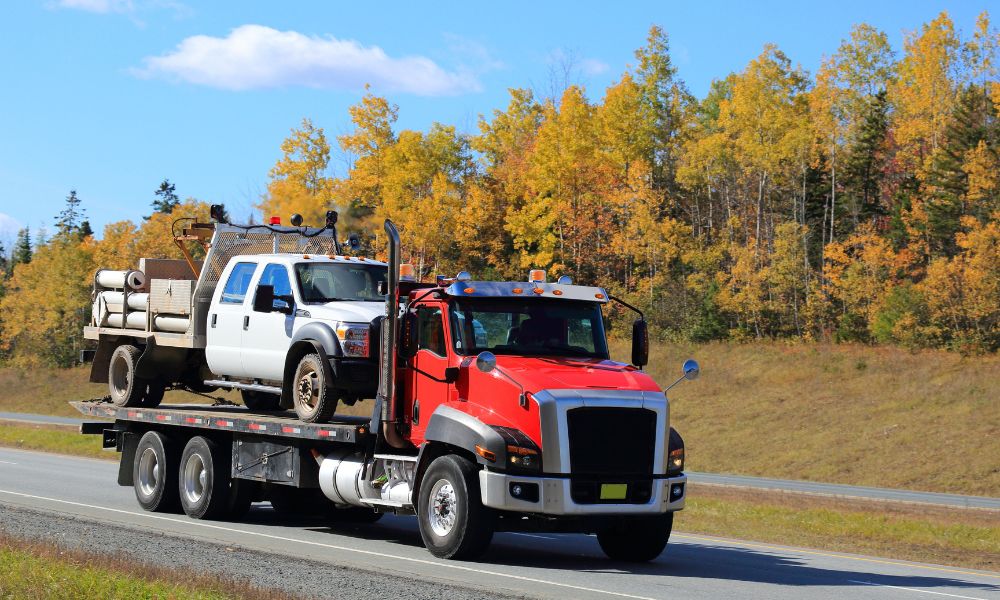
A professional towing service covers far more than moving a broken-down vehicle from one location to a repair facility. An emergency fuel provider can also assist with lockout recovery, replace batteries, and store vehicle parts after an accident. Established companies maintain trained personnel, purpose-built equipment, and response protocols that address multiple incident types under one dispatch. If an unexpected situation requires an immediate response on the road, fleet managers and logistics coordinators who know the complete service range are better prepared to act quickly.
Mechanical support on-site
On-site mechanical assistance clears a large share of roadside call-outs before a full tow becomes necessary. Operators carry battery replacement kits, tyre changing tools, and field diagnostic equipment that identify common faults at the breakdown point. Jump starts account for the highest call-out volume across most towing teams, but the service capacity of established operators extends well beyond that single task. We deliver emergency fuel to vehicles travelling on city streets and remote highway stretches where fuel stations aren’t immediately accessible in case of a dry tank. Lockout recovery tools provide vehicle access without damaging door panels, seals, or locking components. Each problem resolved at the point of failure removes the delay that comes from coordinating multiple separate service providers during a time-critical roadside incident. Operators assess the situation on arrival and execute the correct service without requiring additional contact from the vehicle owner or fleet manager.
Specialised recovery methods
Standard flatbed loading handles most call-outs on sealed and accessible road surfaces. A different approach is required for flood-damaged vehicles, overturned machinery, and cars that have been displaced onto uneven terrain. The winch line, the rigging straps, and the crane-assisted lifting equipment are selected according to the weight of the vehicle, the structural condition of the vehicle, and the terrain at the recovery location. Operators assess each scene individually before committing to a method suited to the specific conditions present at that location.
- Winch recovery for vehicles positioned in ditches or off-road terrain
- Crane-assisted lifting for overturned or structurally compromised vehicles
- Enclosed transport for luxury, vintage, or high-value vehicle recovery
- Flood recovery procedures include drainage assessment before transport begins
- Heavy recovery teams are deployed for commercial or oversized vehicle incidents
A vehicle that is structurally compromised can require additional clearance time, raise total recovery costs, and risk further damage before it reaches a facility that can evaluate it.
Secure post-recovery storage
Recovered vehicles do not always proceed directly to a repair facility on the same day. Accident write-offs awaiting insurance assessment, impounded vehicles pending legal clearance, and flood-damaged property requiring formal inspection all need a secure and documented holding location during the interim period. Licensed operators with on-site storage yards maintain access-controlled facilities where each vehicle is logged upon entry, photographed for condition records, and held until authorised release is confirmed through the correct process. The facility remains accessible to vehicle owners, insurance representatives, and legal coordinators throughout the entire holding period. Structured documentation maintained within professional storage operations supports insurance claims, legal proceedings, and ownership verification following incidents of significant scale or damage severity.
Professional towing operations cover far more than vehicle transport alone. Mechanical support at the scene, specialised recovery techniques, and secure post-recovery storage together define the complete service scope of a fully equipped operator. Companies built across each of these capabilities handle a wider range of stranded vehicle situations with greater speed and less coordination effort required from vehicle owners at every stage.
