
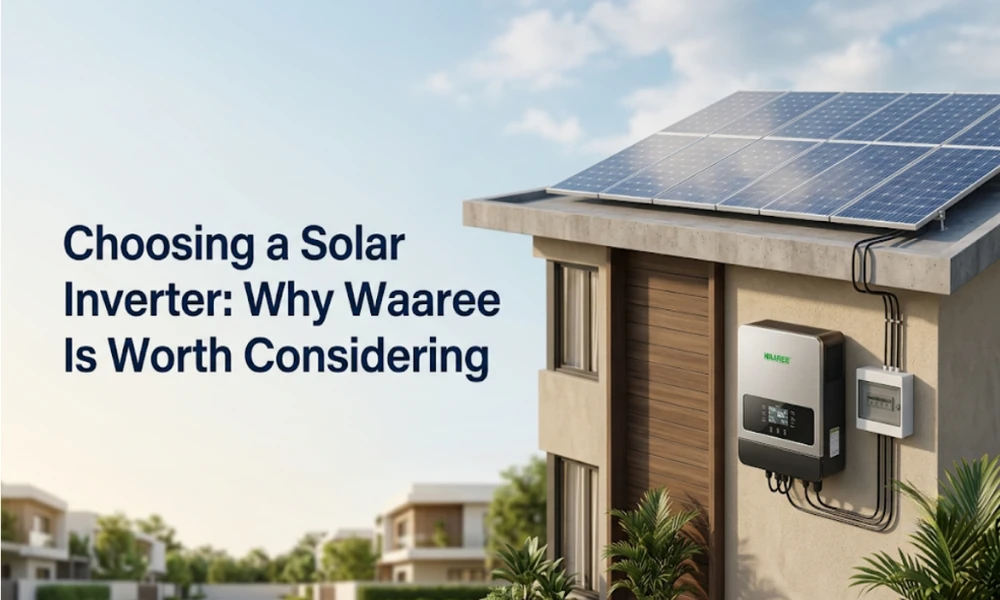
With the number of times that you have heard the word inverter since you first started researching solar energy systems, it would be no surprise if you thought that this is something you need not give much thought. But there is a reason behind this, and a brand such as Waaree Energies plays an important role in it.
What an Inverter Actually Does
Solar panels generate direct current electricity when sunlight hits them. The problem is, your home appliances and the grid both run on alternating current. A solar inverter is the piece of equipment that bridges this gap, converting DC power into usable AC power so it can actually run your lights, fans, and everything else plugged into your home.
Why Waaree Energies Has Built a Strong Reputation Here
Waaree is a homegrown Indian brand, and that matters more than people realize. Indian weather isn’t gentle; you’ve got scorching heat in Rajasthan, heavy humidity along the Kerala coast, and everything in between. Waaree designs its inverters with these exact conditions in mind, rather than adapting a product built for a completely different climate.
Regarding technology, Waaree inverters include a Maximum Power Point Tracking feature that simply means that the inverter is designed in a way that it always tries to extract maximum energy from your panels no matter what the solar radiation situation is. A number of inverters have the option of performance monitoring, meaning you will be able to monitor your solar system’s performance straight from your mobile device. What’s even better, some of the more advanced inverters include features related to grid stability.
A Range Built for Different Needs
One thing that stands out about Waaree’s lineup is how varied it actually is. If you’re setting up a small residential or commercial system, a string inverter usually does the job well. For larger, utility-scale installations, central inverters are the better fit. If your roof has partial shading issues, micro-inverters help squeeze out better efficiency despite that limitation. And for setups involving battery storage, hybrid inverters handle both solar and battery functions together.
For larger residential or commercial installations specifically, a three-phase on-grid inverter is often the right choice, since it balances load more evenly across circuits and handles higher power outputs more efficiently than single-phase alternatives.
How Efficient Are We Actually Talking About
Waaree inverters typically hit conversion efficiencies north of 98 percent under good conditions. In simple terms, that means very little of the power your panels generate gets wasted during conversion, which translates directly into better overall system performance and more value from your solar investment.
Built to Actually Last
These inverters go through fairly rigorous testing before they’re sold, and many carry IP65 or higher ingress protection ratings, meaning they’re well protected against dust and moisture, both common issues in Indian outdoor installations. Combined with solid after-sales support, including a pan-India service network and reasonably prompt technical assistance, this reduces a lot of the anxiety that comes with a long-term equipment investment.
Picking the Right One for Your Setup
The right inverter really depends on a few things specific to you. Your system size should match the inverter’s capacity, and whether you’re doing a rooftop, ground-mounted, or building-integrated installation can affect which type suits you best. Whether your setup is on-grid, off-grid, or hybrid also changes your options considerably. It’s worth thinking ahead too; some Waaree inverters are built with future scalability in mind, so if you’re planning to expand your system down the line, that flexibility can save you money later.
Where Waaree Is Headed
Waaree isn’t just standing still on inverter technology either. The company continues investing in smart energy management systems designed to optimise how homes and businesses actually consume power, alongside early exploration into vehicle-to-grid technology, where electric vehicles could eventually interact directly with the power grid.
Making the Switch
Whether you need a straightforward string inverter for a small home setup or a more sophisticated three-phase on-grid inverter for a commercial project, Waaree’s product range is built to cover most scenarios you’ll run into. Beyond just the equipment itself, choosing Waaree means getting a manufacturer with over 25.8 GW in manufacturing capacity, decades of experience navigating Indian conditions specifically, and a support network that actually shows up when you need it.
If you’re exploring your options, Waaree’s official platforms make it fairly easy to browse through their inverter lineup and figure out what fits your specific setup, whether that’s a modest rooftop system or a much larger commercial installation.
